REMEMBER · I
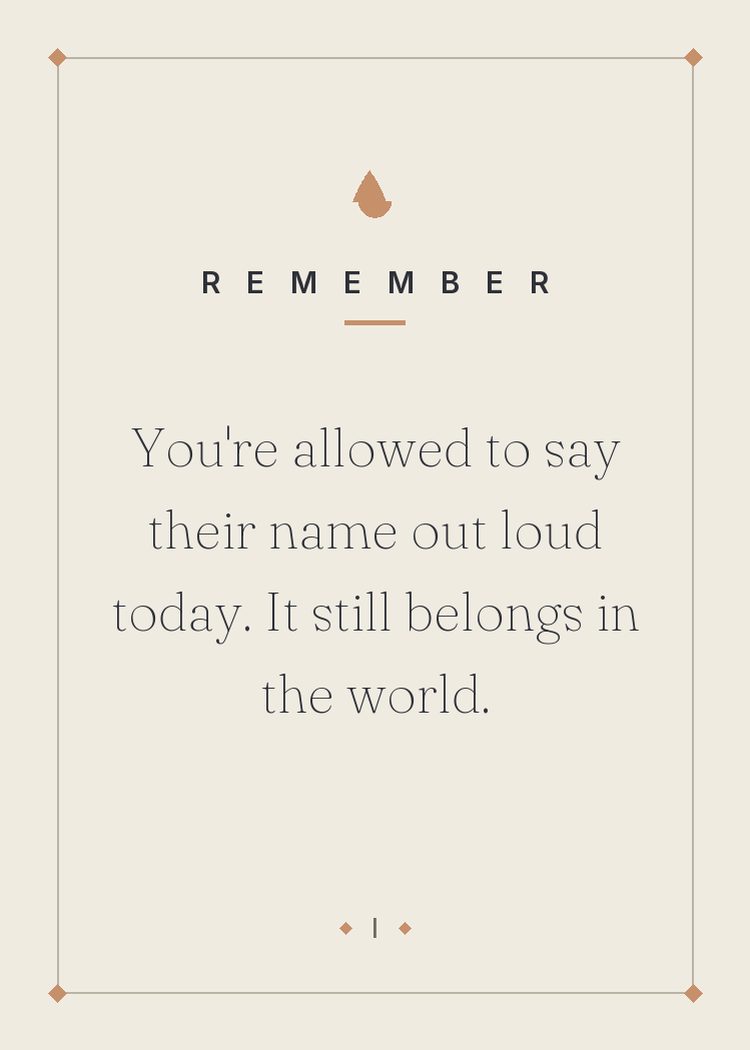
Bereaved people consistently report a second wound: the world stops saying the name. Silence, usually meant as kindness, performs erasure. Research on continuing bonds shows that speaking of the dead — casually, by name — maintains their social existence and gives the griever permission to keep the relationship public. Entire movements in child loss are built on this one act. Saying the name is maintenance work on a bond that continues.
Voices — this card, in use
Teaching vignettes: illustrative voices showing the practice applied. The living candle wall grows below.
Callie — 'said Dad would've loved this at dinner, unprompted. the table exhaled. turns out everyone was waiting for permission to say his name.'
Reg — 'the world went quiet around her name like it was contraband. I broke the seal. Elaine. still belongs in every room I'm in.'
Whatever is coming up
This room is open every time — tonight, the anniversary, years from now. What's here right now?
The practice
Say their name out loud today — in a sentence, to a person, mid-conversation, unprompted. Watch what it does to the room. Watch what it does to you.
When it's yours
If it's early daysPeople avoid the name to spare you. Break the seal yourself; you'll teach everyone the name is speakable.
If it's been a long timeYears on, dropping their name casually — 'Dad would have loved this' — keeps them in the family's living vocabulary.
If it was complicatedTheir name may carry charge. You can say it anyway, or not — the name answers to you now.
Sit with this
When did you last hear someone else say their name — and what would it mean to hear it more?
Grief literacy
Term to know: Social death — the second loss, when the world stops speaking of them. Saying the name is the countermeasure.
If this card holds you
This room doesn't expire. Grief isn't a one-time event — anniversaries, ambushes, the good years, the hard ones — and the card in your hand is a permanent key. Come back for whatever is coming up.
This card lives in the deck — 52 companions, on a nightstand near the people you love. Buy the physical deck — $35.00 · free US shipping