FEEL · I
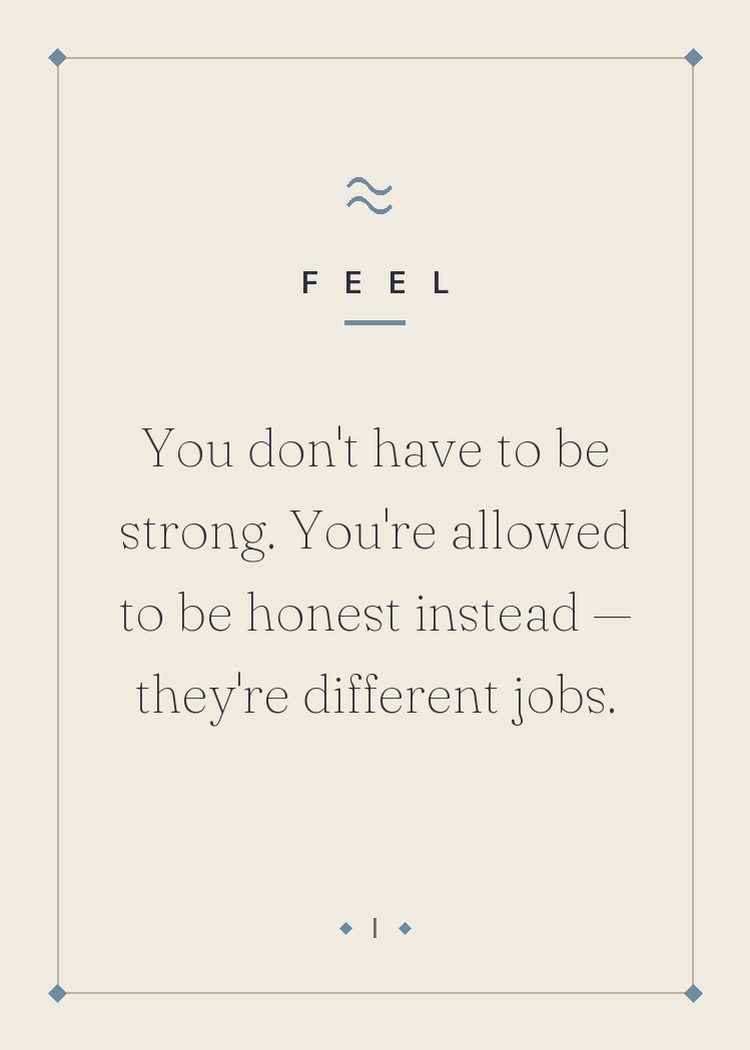
James Gross's emotion regulation research reached a durable finding: suppressing emotional expression doesn't reduce the emotion — it increases physiological arousal while adding the labor of performance. 'Being strong' is expressive suppression by another name, and it charges twice. Honesty — feeling what is actually there, saying what is actually true — costs less than the mask does. Strength and honesty are different jobs; grief only requires the second.
Voices — this card, in use
Teaching vignettes: illustrative voices showing the practice applied. The living candle wall grows below.
Marta — 'I retired from being strong on a Tuesday. told my brother one true sentence. cost less than the mask did. the card was right about the rent.'
Deshawn — 'honest doesn't mean falling apart. it means when Cal asked, I said bad week, man. that's the whole skill.'
Whatever is coming up
This room is open every time — tonight, the anniversary, years from now. What's here right now?
The practice
Once today, answer honestly instead of performing: when a safe person asks how you are, say one true sentence. Notice the cost of the mask versus the cost of the truth.
When it's yours
If it's early daysYou may not know yet what you feel — 'I don't know, it's bad' is honest and complete.
If it's been a long timeLong grief tempts a permanent performance of fine. Audit it yearly: who still gets the truth?
If it was complicatedHonesty here includes the unspeakable parts — relief, anger, numbness. Honest doesn't mean pretty. It means true.
Sit with this
What's the true sentence you haven't said out loud yet — and who could hear it without flinching?
Grief literacy
Term to know: Expressive suppression — hiding emotion increases its physiological cost (Gross). The mask charges rent.
If this card holds you
This room doesn't expire. Grief isn't a one-time event — anniversaries, ambushes, the good years, the hard ones — and the card in your hand is a permanent key. Come back for whatever is coming up.
This card lives in the deck — 52 companions, on a nightstand near the people you love. Buy the physical deck — $35.00 · free US shipping