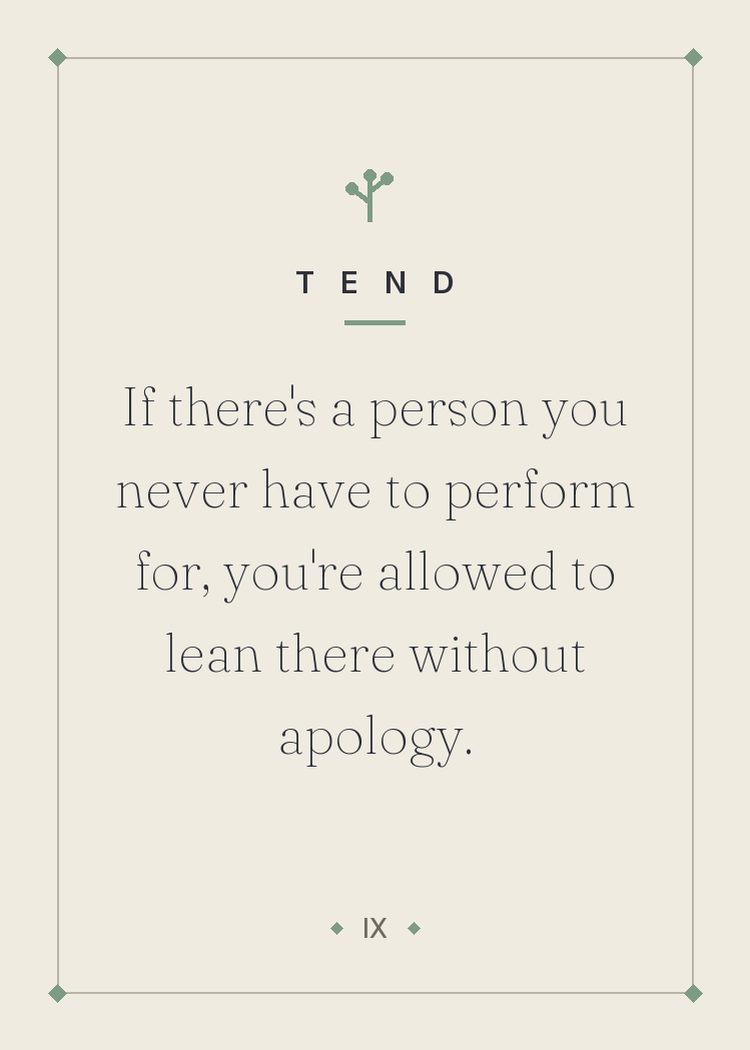
TEND · IX
Attachment research finds that a single secure relationship — one person you never perform for — buffers stress measurably; co-regulation with a safe other calms the nervous system in ways solitude cannot. You don't need a network of twelve. You need to identify the one, and lean there deliberately rather than distributing your rawness across people who require managing. Find your safe person. That relationship is medical-grade.
Voices — this card, in use
Teaching vignettes: illustrative voices showing the practice applied. The living candle wall grows below.
Ari — 'named my safe person out loud: it's Dana. then leaned on purpose, rawness unmanaged. medical-grade, exactly like the card claims.'
Betty, 75 — 'concentrated the truth in one friend instead of updating twelve. the buffer is a relationship, so I tend it back. we hold each other's storms.'
Whatever is coming up
This room is open every time — tonight, the anniversary, years from now. What's here right now?
The practice
Name your safe person — actually say the name. Then lean, this week, on purpose: one unperformed conversation, rawness unmanaged. If no name comes, finding one becomes this card's assignment.
When it's yours
If it's early daysDistribute wisely: one safe person for truth beats ten acquaintances for updates. Concentrate the rawness where it's held.
If it's been a long timeSafe people need maintenance — thank them, show up for their storms too. The buffer is a relationship, not a service.
If it was complicatedYour safe person for this grief must be someone who won't defend them or prosecute them — just hold you. Choose precisely.
Sit with this
Who has seen you cry without flinching — and do they know the role they hold?
Grief literacy
Term to know: Co-regulation — a secure other calms the nervous system in ways solitude can't. One safe attachment is medical-grade.
If this card holds you
This room doesn't expire. Grief isn't a one-time event — anniversaries, ambushes, the good years, the hard ones — and the card in your hand is a permanent key. Come back for whatever is coming up.
This card lives in the deck — 52 companions, on a nightstand near the people you love. Buy the physical deck — $35.00 · free US shipping