FEEL · III
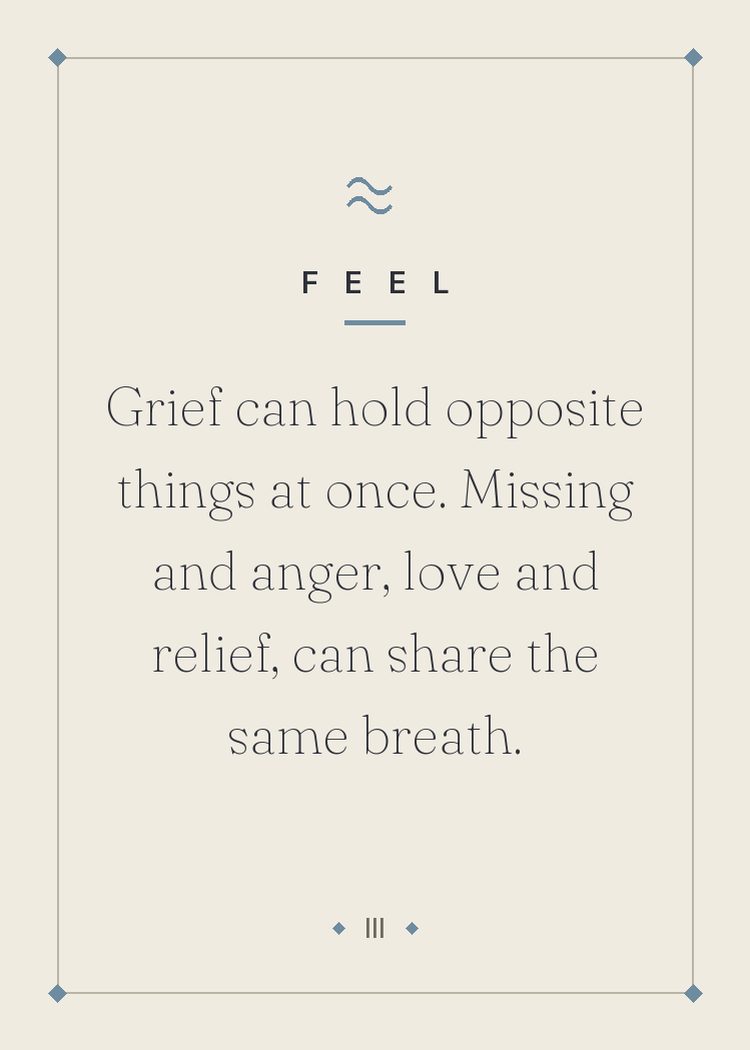
Grief researchers have long observed that mourning is hardest, not easiest, when relationships were complicated — because the mind must hold love and injury simultaneously. The clinical insight: integration, not resolution, is the goal. You are not required to settle the contradiction, only to let both truths exist. Missing someone and being furious with them in the same breath is not confusion. It is accuracy about a real relationship.
Voices — this card, in use
Teaching vignettes: illustrative voices showing the practice applied. The living candle wall grows below.
Cora — 'I miss her and I'm still furious at her. wrote both sentences side by side like the card said. neither one blinked. both stay.'
Miguel — 'loving and being angry in the same breath felt like malfunction. it's just accuracy. my dad was both things. so is the grief.'
Whatever is coming up
This room is open every time — tonight, the anniversary, years from now. What's here right now?
The practice
Complete both sentences, privately: 'I miss...' and 'I'm still angry about...' Don't reconcile them. Read them side by side and let both be permanently true.
When it's yours
If it's early daysFresh grief for a complicated person whiplashes between love and fury by the hour. That speed is normal.
If it's been a long timeYears may soften one side or the other — or neither. Integration means carrying both, not settling the case.
If it was complicatedThis card is your home card. The contradiction isn't a problem to solve; it's an accurate map of a real relationship.
Sit with this
What do you miss that you're almost ashamed to miss — and what are you angry about that you're almost ashamed to name?
Grief literacy
Term to know: Ambivalent grief — mourning where love and injury coexist; integration, not resolution, is the goal.
If this card holds you
This room doesn't expire. Grief isn't a one-time event — anniversaries, ambushes, the good years, the hard ones — and the card in your hand is a permanent key. Come back for whatever is coming up.
This card lives in the deck — 52 companions, on a nightstand near the people you love. Buy the physical deck — $35.00 · free US shipping