FEEL · IX
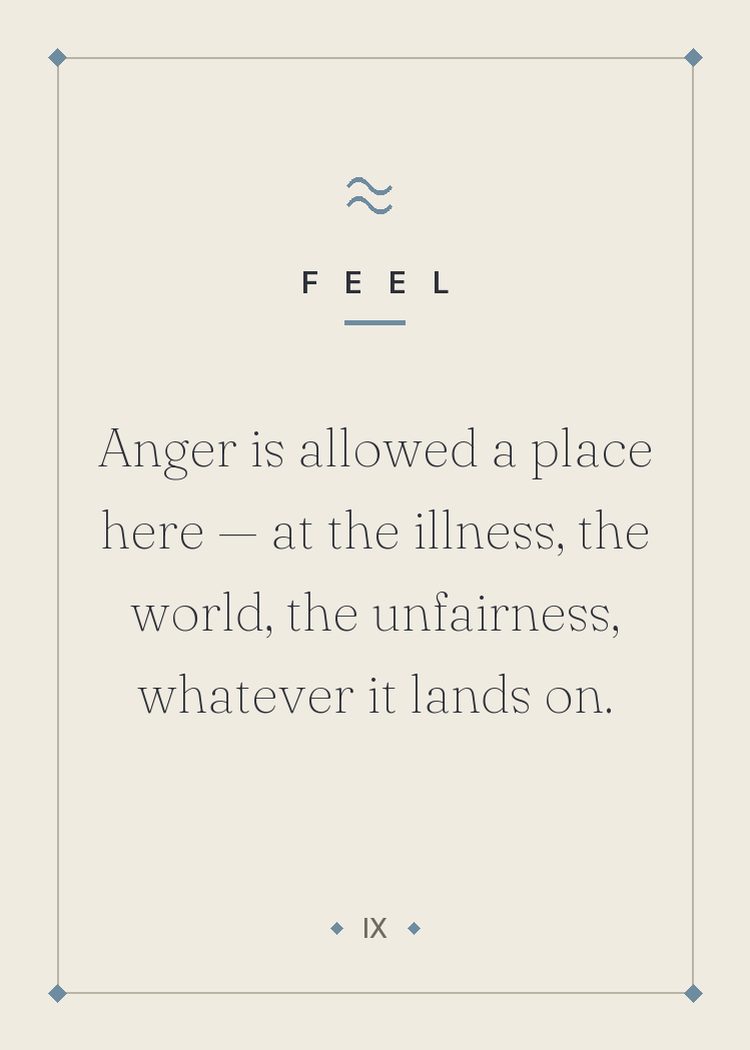
Bowlby identified protest as a core phase of separation distress: the attachment system rages against a loss it cannot accept. Anger in grief — at them, at doctors, at God, at people whose lives continued — is that protest, and it is one of the most commonly reported and least socially permitted grief emotions. Suppressed anger tends to convert to guilt or depression. Allowed anger tends to move through. It is allowed.
Voices — this card, in use
Teaching vignettes: illustrative voices showing the practice applied. The living candle wall grows below.
Yara — 'wrote the furious letter. never sending it. the anger had ten minutes and a channel and stopped leaking into everything else.'
Stan, 66 — 'I was angry at my wife for dying. said it out loud in the truck. felt like blasphemy, worked like medicine.'
Whatever is coming up
This room is open every time — tonight, the anniversary, years from now. What's here right now?
The practice
Give the anger ten honest minutes and a channel: write the furious letter you'll never send, walk fast, say it out loud in the car. Anger moved through is anger that doesn't calcify.
When it's yours
If it's early daysEarly anger sprays widely — doctors, God, drivers, the dead. Wide spray is normal protest, not character failure.
If it's been a long timeOld unspent anger tends to resurface as bitterness or fatigue. It's never too late to give it the ten minutes.
If it was complicatedAnger at the dead is the most censored grief emotion and often the most earned. This card is its permit.
Sit with this
What are you actually angry about beneath the polite version — and where does that anger currently live in your week?
Grief literacy
Term to know: Protest — Bowlby's term for the attachment system raging against a loss it can't accept. Anger is grief in armor.
If this card holds you
This room doesn't expire. Grief isn't a one-time event — anniversaries, ambushes, the good years, the hard ones — and the card in your hand is a permanent key. Come back for whatever is coming up.
This card lives in the deck — 52 companions, on a nightstand near the people you love. Buy the physical deck — $35.00 · free US shipping