FEEL · IV
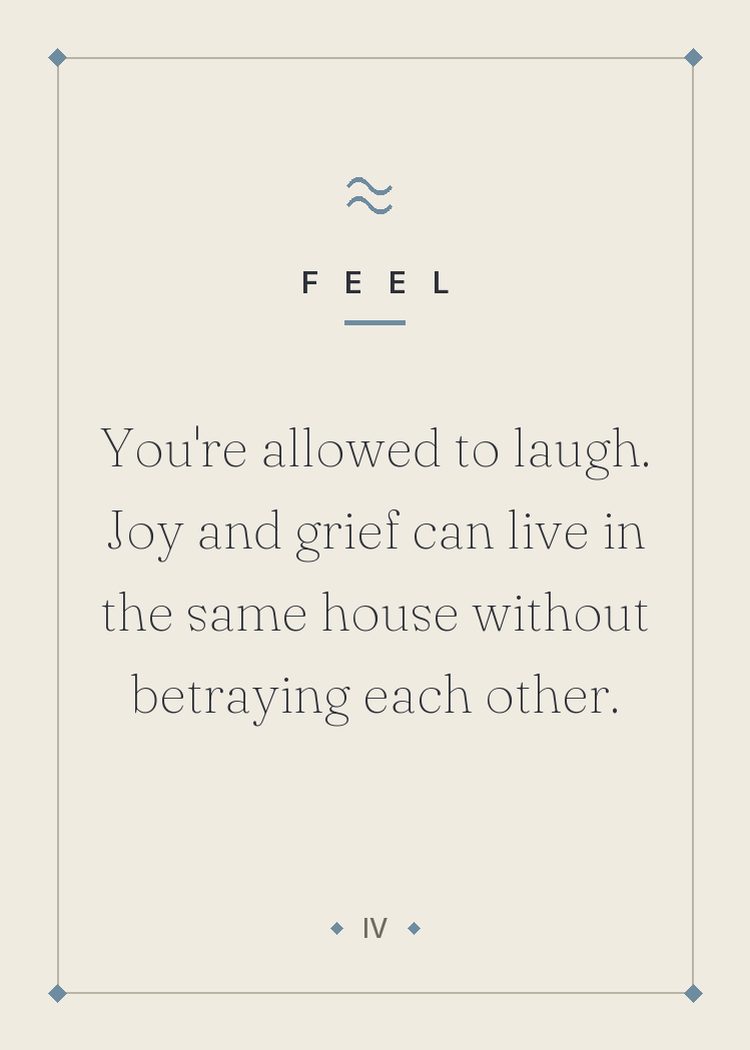
George Bonanno and Dacher Keltner's studies of bereaved people found something counterintuitive: those who genuinely laughed and smiled when remembering their loss adjusted better over time. Positive emotion isn't betrayal of grief — it's a functional part of it, giving the nervous system recovery intervals between waves. Joy and grief genuinely share a house. Laughing today doesn't mean you loved them less. It may mean your system is healing correctly.
Voices — this card, in use
Teaching vignettes: illustrative voices showing the practice applied. The living candle wall grows below.
Ruthie, 70 — 'we laughed at his terrible parking at the funeral lunch. hardest I'd laughed in weeks. felt like him, visiting.'
Dev — 'first laugh, instant guilt. then I read that laughter predicts healing. now when I laugh at her jokes I figure she landed one.'
Whatever is coming up
This room is open every time — tonight, the anniversary, years from now. What's here right now?
The practice
Tell someone — or write down — one genuinely funny memory of them today. Let yourself laugh at it. Notice you can hold the laugh and the ache in the same minute.
When it's yours
If it's early daysThe first laugh after a death often triggers instant guilt. Let this card veto the guilt: laughter is adjustment working.
If it's been a long timeEventually the funny memories outnumber the sharp ones in daily rotation. That's not forgetting. That's proportion returning.
If it was complicatedDark humor about a hard relationship is still processing. Comedians grieve too — sometimes best.
Sit with this
What's the story about them that always gets a laugh — and when did you last let it?
Grief literacy
Term to know: Positive emotion in bereavement — genuine laughter while grieving predicts better adjustment (Bonanno & Keltner).
If this card holds you
This room doesn't expire. Grief isn't a one-time event — anniversaries, ambushes, the good years, the hard ones — and the card in your hand is a permanent key. Come back for whatever is coming up.
This card lives in the deck — 52 companions, on a nightstand near the people you love. Buy the physical deck — $35.00 · free US shipping