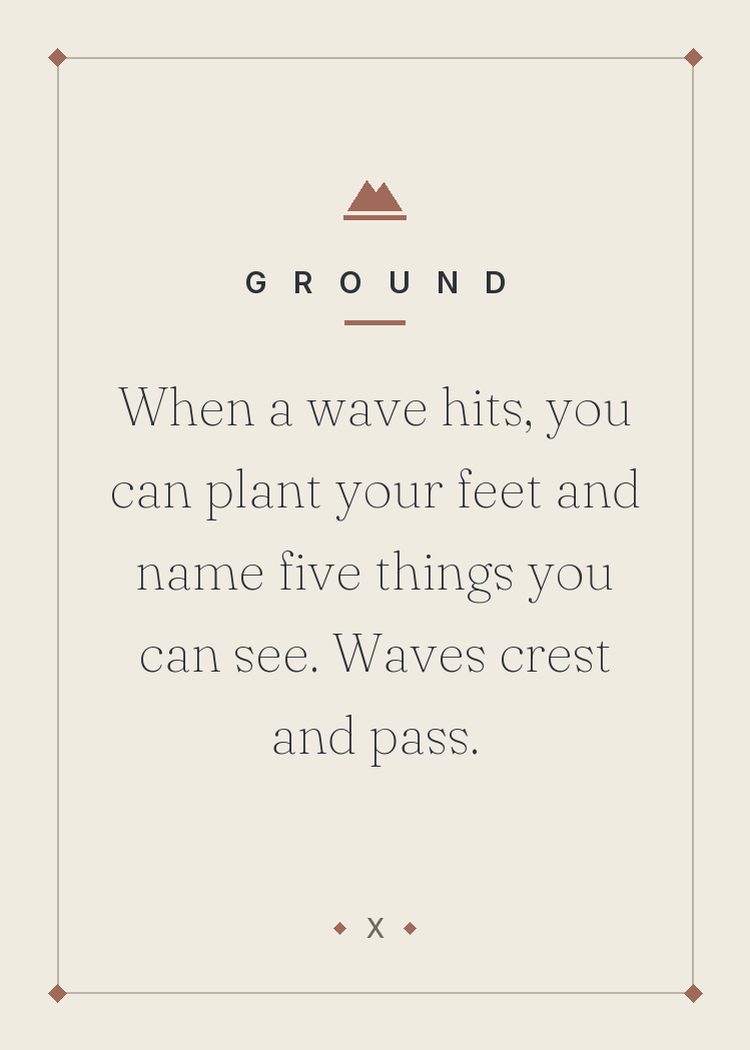
GROUND · X
Therese Rando named them STUGs — sudden temporary upsurges of grief — the ambush waves that arrive triggered or from nowhere. Two facts about them are load-bearing: they crest and pass, always; and sensory grounding shortens them. Naming five visible things is the classic 5-4-3-2-1 technique — it occupies the attention channels panic uses and holds you in the present until the wave completes. Your record against waves remains perfect.
Voices — this card, in use
Teaching vignettes: illustrative voices showing the practice applied. The living candle wall grows below.
Grace — 'wave hit in the cereal aisle. feet flat, five things I could see. box, light, cart, sign, my own hands. it passed. they pass.'
Omar — 'I rehearsed the drill on a calm day like the card said. when the anniversary wave came, my body already knew the steps.'
Whatever is coming up
This room is open every time — tonight, the anniversary, years from now. What's here right now?
The practice
Learn the drill before the wave: feet flat, name five things you can see, four you can hear, three you can touch. Rehearse it once now, calm, so it's ready when the water rises.
When it's yours
If it's early daysWaves may come minutes apart right now. That's the acute phase — a pace, not a forever.
If it's been a long timeA rogue wave years later can feel like failure. It isn't. Frequency changed; the mechanism never does. Same drill, same result.
If it was complicatedWaves for a complicated person often arrive carrying anger's edge. Ground the body first; sort the feeling after. Order matters.
Sit with this
What most often sets off your waves — and what has each wave, without exception, eventually done?
Grief literacy
Term to know: STUG — sudden temporary upsurge of grief (Rando). Naming the wave shrinks it.
If this card holds you
This room doesn't expire. Grief isn't a one-time event — anniversaries, ambushes, the good years, the hard ones — and the card in your hand is a permanent key. Come back for whatever is coming up.
This card lives in the deck — 52 companions, on a nightstand near the people you love. Buy the physical deck — $35.00 · free US shipping