REMEMBER · V
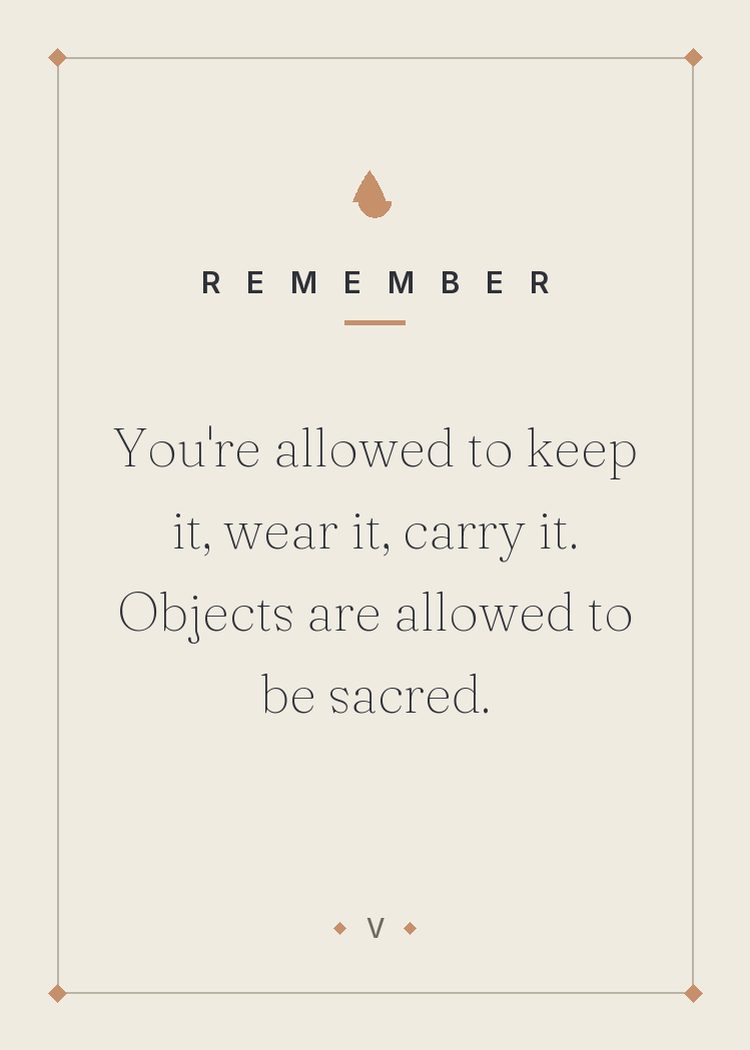
Kept things can become physical anchors for a continuing bond — worn, carried, touched when words fail. Pacing belongs entirely to the griever. A sweater can hold what a mind is still learning to carry. Objects are allowed to be sacred.
Voices — this card, in use
Teaching vignettes: illustrative voices showing the practice applied. The living candle wall grows below.
Hana — 'his watch got a job: my wrist, every day. objects in service hold better than objects in boxes. it's openly sacred now.'
Walt — 'everyone had a deadline for her closet except the research. there's no deadline for deciding about objects. the closet and I are taking our time.'
Whatever is coming up
This room is open every time — tonight, the anniversary, years from now. What's here right now?
The practice
Choose one object of theirs and give it a job: wear the watch, use the mug, carry the pocketknife. Objects in service hold better than objects in boxes. Let one thing be openly sacred.
When it's yours
If it's early daysIgnore every deadline about 'going through their things.' There is no deadline for deciding about objects. Your pace is the pace.
If it's been a long timeYears on, one worn ring can carry what a storage unit was holding. Distillation is allowed — on your schedule.
If it was complicatedYou may keep objects from a complicated person with complicated feelings attached. Sacred doesn't require simple.
Sit with this
Which object is really theirs to you — and does it currently live in service or in exile?
Grief literacy
Term to know: Linking objects — physical items that maintain the bond. Anchors, not pathology.
If this card holds you
This room doesn't expire. Grief isn't a one-time event — anniversaries, ambushes, the good years, the hard ones — and the card in your hand is a permanent key. Come back for whatever is coming up.
This card lives in the deck — 52 companions, on a nightstand near the people you love. Buy the physical deck — $35.00 · free US shipping