FEEL · VI
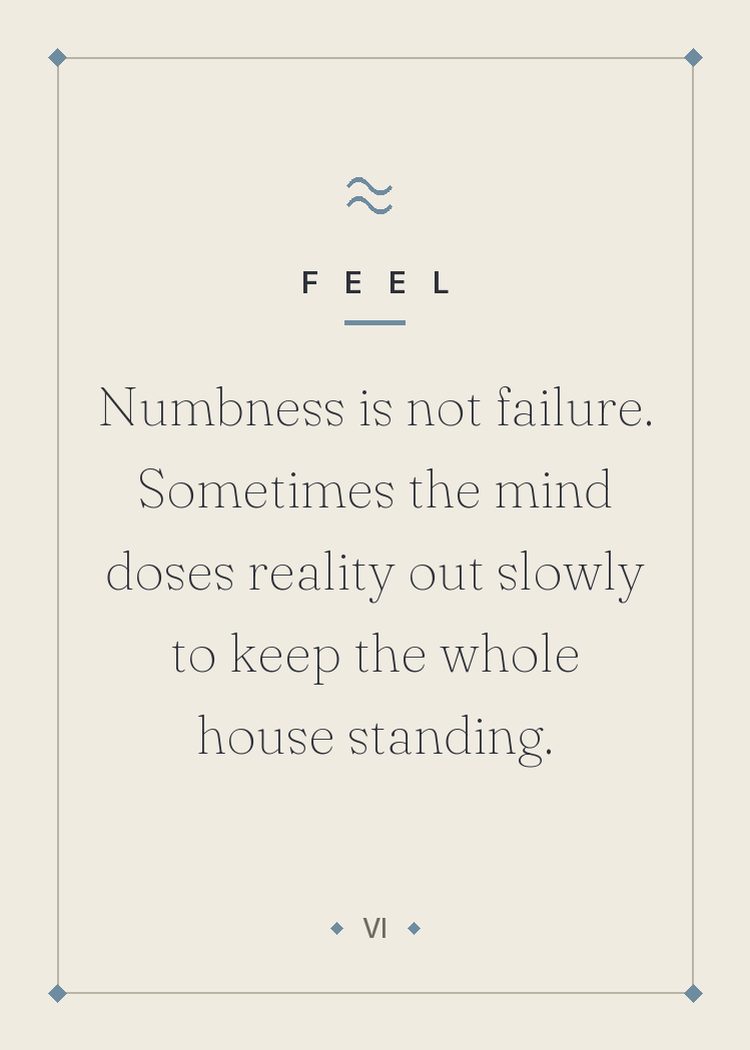
Numbness after loss is a documented protective response — the psyche rationing how much reality it processes at once. William Worden described mourning as gradually 'actualizing' the loss; the mind takes the truth in doses it can metabolize. Numbness is one of the dosing mechanisms, not evidence of insufficient love. For most people it thaws on its own schedule, and feeling returns wave by wave, as capacity does.
Voices — this card, in use
Teaching vignettes: illustrative voices showing the practice applied. The living candle wall grows below.
Wren — 'felt nothing for two weeks and panicked about it. the fuse-box line saved me. the heart knew what it was doing. feeling came back room by room.'
Tony — 'numb wasn't broken. numb was rationing. when it thawed I understood why the dose had been controlled.'
Whatever is coming up
This room is open every time — tonight, the anniversary, years from now. What's here right now?
The practice
If you're numb, stop trying to feel. Instead, describe the numbness like a scientist: where it sits, what it muffles. Observation without force is how thaw usually begins.
When it's yours
If it's early daysNumbness in the first days often shocks people — 'why aren't I crying?' You're dosing. The tears know the address.
If it's been a long timeNumbness returning after years usually flags overload elsewhere. Check the whole load, not just the grief.
If it was complicatedNumbness toward a complicated person can carry extra guilt. It's still protection, not verdict.
Sit with this
If the numbness could speak, what is it protecting you from feeling all at once?
Grief literacy
Term to know: Protective numbing — the psyche rationing reality into survivable doses; a mechanism, not a malfunction.
If this card holds you
This room doesn't expire. Grief isn't a one-time event — anniversaries, ambushes, the good years, the hard ones — and the card in your hand is a permanent key. Come back for whatever is coming up.
This card lives in the deck — 52 companions, on a nightstand near the people you love. Buy the physical deck — $35.00 · free US shipping